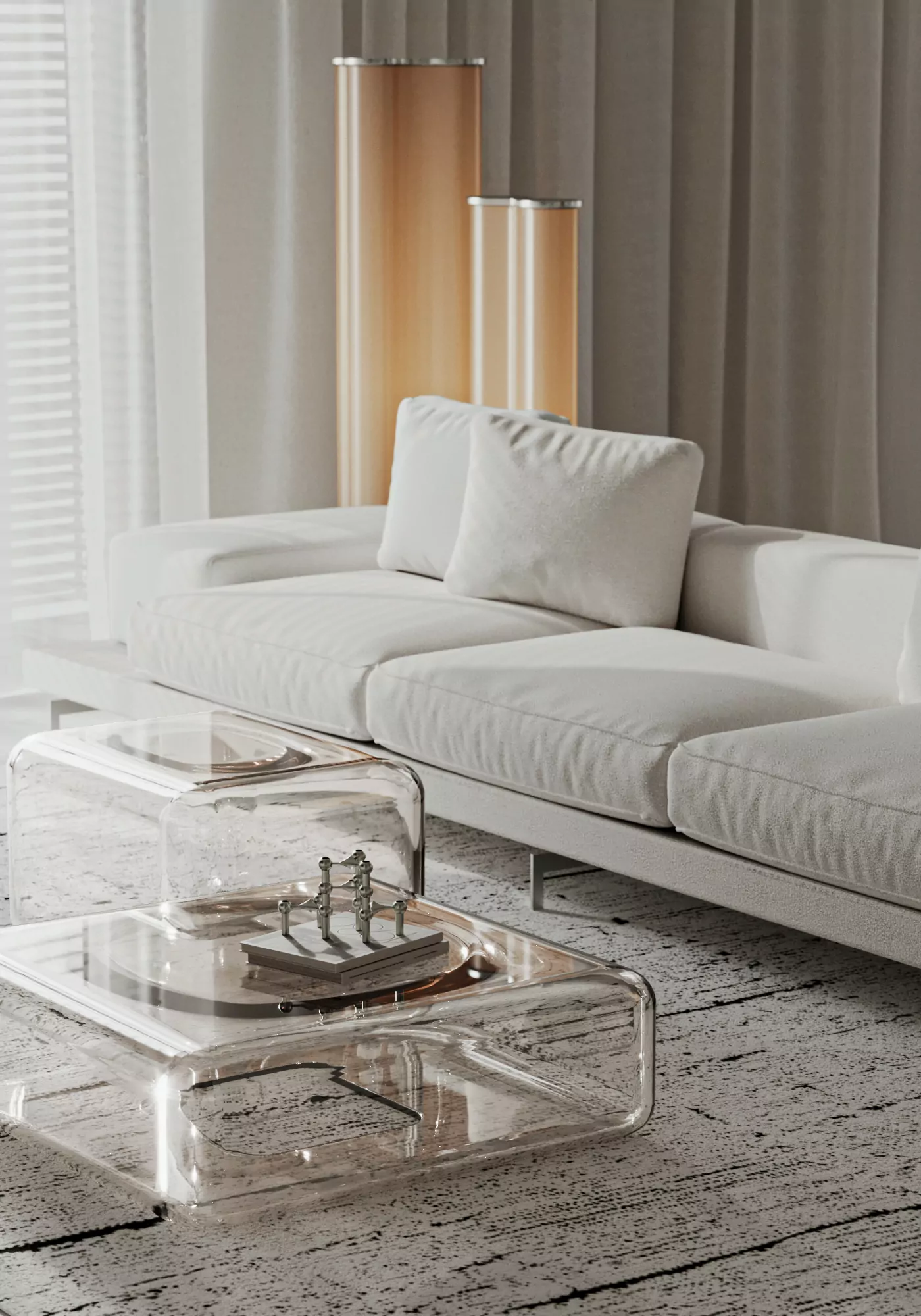
Creating custom furniture goes beyond selecting items from European catalogs. The value of an interior is formed by the geometry of shapes and the quality of execution. Practice shows that simple structures often allow for the use of standard materials, which, when properly treated, appear more expensive than complex imported analogues. The key stage is the physical prototype: without a test model, hidden defects in welding, joints, and ergonomics cannot be identified. The cohesion of items in a unified style creates a harmonious space where every detail works towards the overall image.
Key aspects of the article:
- Custom furniture is formed through an engineering task, not by copying catalogs
- A physical prototype is necessary to identify production defects
- Chair ergonomics are critical for prolonged use without fatigue
- MDF and solid wood are more eco-friendly than LDFSP in residential spaces according to emission class
- Warm light up to 3500 K reveals material texture without distorting shades
- Warranty for upholstered furniture is 18 months according to GOST for seating items
Design Process and Technologies
The process of creating a furniture item begins long before selecting upholstery or wood. This is an engineering task. Before drawing a sketch of a chair or sofa, it is necessary to analyze the niche. Which forms are already outdated? Where is there a gap in functionality? Often, clients come with a desire to "make it like in the picture," but it is important to understand the essence: what exactly is liked—proportions, color, or the way of sitting? Based on this, a technical assignment is formed. The sketch of the first design is not an object, but an image sketch. It must answer the question: "Is the idea clear?" If yes, the object moves to the stage of detailing and 3D modeling. In practice, specialized programs are used, such as Archicad for integration into the overall scheme, or solutions like Bazis-Mebelshik for cutting and construction.


Ergonomics and Seat Geometry
At the 3D modeling stage, ergonomics are checked. For a dining chair, a lounge chair, and a workstation, the requirements for seating are radically different. Seat height is usually about 45 cm, and the angle between the thigh and shin should exceed 90°. As a result, the item looks effective in a render, but in real life, it turns out to be uncomfortable. Therefore, the designer and engineer must work together: form is dictated by function, not the reverse. Chair ergonomics are critical for any prolonged stay, including eating and working. An uncomfortable chair should not be used in a home simply because it looks good in a photograph.
Production and Quality Control
The biggest mistake when creating interior furniture is underestimating the production stage. Many believe that if a 3D model looks perfect, the workshop will simply reproduce it. In practice, the first item almost always requires adjustments. On trial samples, defects invisible in drawings appear: weld marks on metal pipes, uneven geometry after sanding, problems with joint adhesion. The most accurate way to assess real joints and geometry is on a physical sample.
Quality control in production requires the involvement of a designer—only by seeing a real sample can one assess the admissibility of joints and geometric accuracy. Quality cannot be checked by one picture.
Trial specimens are not defects to be hidden, but a tool for training production. If indentations from fixing a pipe during welding or missing plugs on holes are found on the first metal chair, these details must be eliminated before launching the series. Only such control allows creating furniture that will serve for decades, not disintegrate after a year of active use. Manufacturing a trial sample requires time, which depends on the complexity of the structure and production load. A correctly designed metal frame serves for decades, even if the upholstery requires replacement.
Materials and Ecology
The discussion of materials also requires reviewing stereotypes. It often seems that for an expensive interior, rare wood species or exotic leathers are needed. In reality, with quality treatment, MDF and veneer can look premium. The key is the quality of the finish coating and surface treatment. A simple item with precise geometry and flawless finishing looks more expensive than a complex and unrefined one. When choosing materials for cabinet furniture, it is worth considering the difference between MDF, LDFSP, veneer, and solid wood. MDF with enamel or veneer gives a smooth surface and a wide range of colors; LDFSP is cheaper but less durable; solid wood is expensive and requires special care. The choice depends on the budget and operating conditions. From an ecological point of view, MDF and solid wood are preferable to LDFSP as they emit less formaldehyde. Quality MDF corresponds to emission class E0 or E1, whereas standard LDFSP may exceed these indicators. It is important to remember: saving on hardware is unacceptable. Even the most expensive MDF board will not last long if the hinges and slides are of low quality.
Veneer is a slice of wood; it is sensitive to humidity fluctuations and can deform. It requires a stable microclimate. In rooms with unstable conditions, alternative solutions are recommended, or humidity should be compensated by climate systems. This is especially relevant for kitchens and areas near windows.


Light and Systemicity
An important aspect when choosing furniture for an interior is systemicity. Items should not compete with each other for attention. They should form a single ensemble, like notes in a musical composition. When designing a space, furniture items should be kept in a unified style, having common design elements (for example, characteristic rounded corners or frame details), but differing in functional purpose. This creates a sense of completion and expensive taste, which cannot be achieved by assembling random items from different stores.
Rejecting ready-made imported solutions allows reallocating the budget in favor of engineering systems and finishing materials—without losing quality. Funds saved on logistics and duties can be directed to developing forms and controlling production. Light plays an important role in perceiving materials. Warm light (2700–3500 K) favorably reveals wood texture and material texture. Cold light above 3500 K is perceived as office-like and can distort shades. The same paint shade can look different under different light. It is recommended to test samples under natural and artificial lighting before making a final decision. All light sources in one room should have the same color temperature with a difference of no more than 300–500 K for residential rooms.


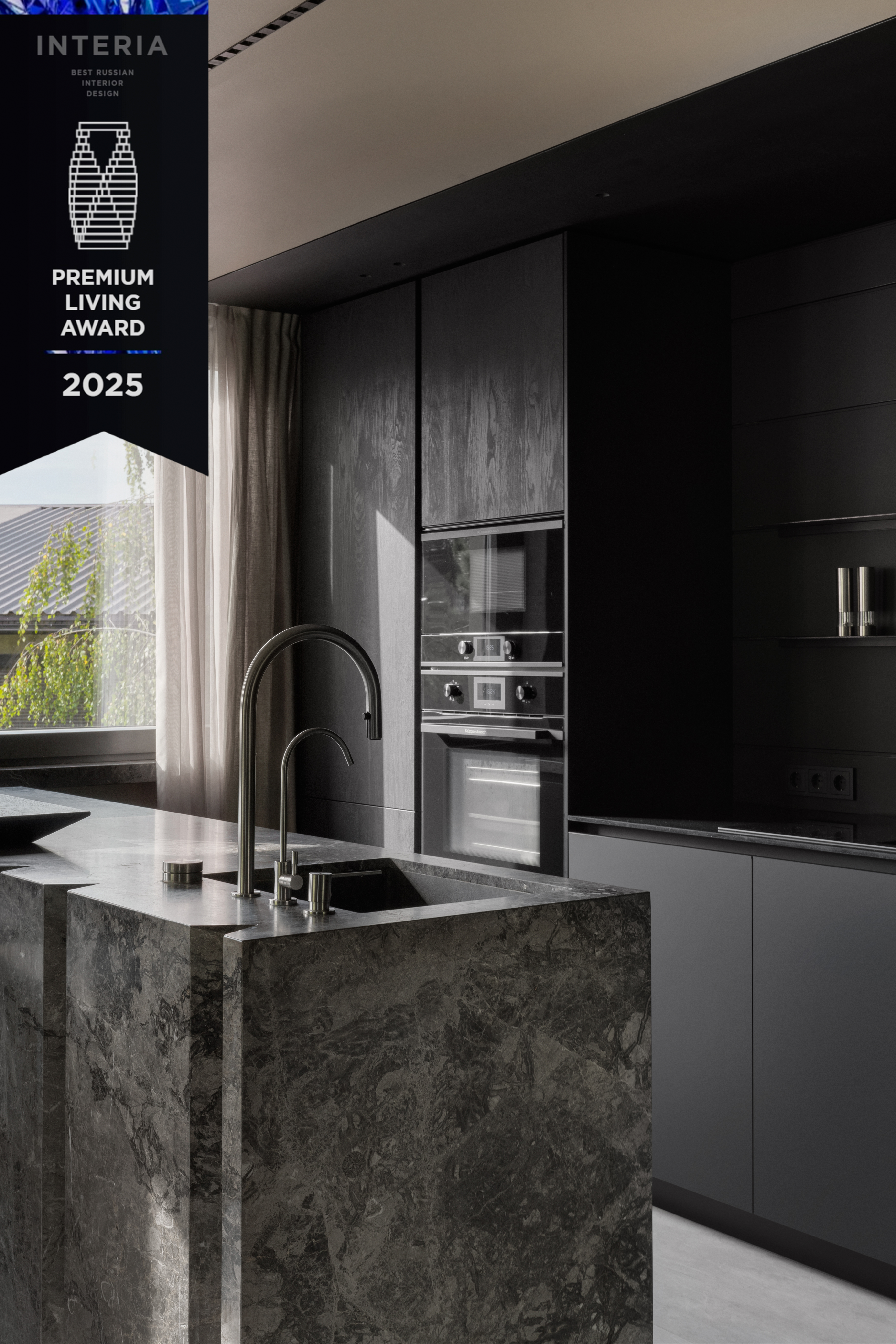
A luxurious bathroom interior designed in strict minimalism using deep dark wood tones and matte surfaces. The walls are finished in light stone or concrete, contrasting with the black cabinetry and fixtures. Warm backlighting under floating shelves and above the vanity creates a cozy atmosphere.

Summary for the Client
Do not copy catalogs directly; use them as a basis for analysis, but create unique forms for your tasks and space. Invest in prototyping: the first furniture sample is always a test; it is normal to refine it to perfection before ordering a batch. Simple forms save budget, while complex geometry requires expensive equipment. Monitor chair ergonomics; check seating on a real sample. Create a furniture ecosystem: interior items should harmonize with each other in style and texture, forming a cohesive look of the room. Pay attention to material emission classes and hardware quality.
Send us the parameters of your furniture task for consultation: specialists will advise on which design techniques can help reduce costs without losing quality.